
Home
  • AI Mode
  • Supply Chain Orchestration
    fast
    Supply Chain Orchestration
    • Life Sciences Company
    • Direct Material Supplier
    • Contract Manufacturer
    • Third Party Logistics
    • Wholesale Distributor
    • Healthcare Provider
    • Retail Pharmacy
  • Network
  • Products
    fast
    Products
    • Multienterprise Information Network Tower (MINT)
    • Process Orchestration for Empowered Teams (POET)
    • Track-and-Trace
  • Resources
    fast
    Resources
    • Resource Center
    • TraceLink University
    • TraceLink Glossary
    • Partners
    • Community
    • Events
    • Customers
  • About
    fast
    About
    • Our Story
    • Newsroom
    • Culture and Careers
    • Leadership
    • Our Values
    • Corporate Social Responsibility
    • Contact Sales
  • Log In
    • Tracelink Classic
      TraceLink Classic app.tracelink.com
      Redirect
    • Opus Platform
      Opus Platform opus.tracelink.com
      Redirect
Log In
  • Tracelink Classic
    TraceLink Classic app.tracelink.com
    Redirect
  • Opus Platform
    Opus Platform opus.tracelink.com
    Redirect
Resources

Breadcrumb

  1. Home
  2. Resources
  3. Resource Center

To Aggregate or Not: 5 Deciding Factors

banner-image
  • Download PDF
  • Share
    • LinkedIn
    • Facebook
    • Mail
    • Twitter

Table of contents

Now that you have a sense of what aggregation would mean throughout your facilities, it is important to decide if and how you will enable it. To come to an informed conclusion and start to shape your strategy, here are five things to evaluate:

1 – What are your market requirements?

How many of the countries in which you currently sell product require aggregation? Be sure to look beyond compliance demands for the most imminent deadline – some markets will phase aggregation in over time. You also need to evaluate what markets you’re likely to move into and their aggregation mandates.

If at least some of your markets require it, then at least a portion of your lines will need to support it. In that case, you may want to weigh upgrading costs against operational simplicity: some manufacturers are deciding to enable aggregation across the board since having different line setups and processes for different facilities adds complexity. And some have designed aggregation capabilities into their packaging lines, but have initially only implemented item level serialization. This approach may help avoid re-design in the future.

2 - What are your trade partner preferences and requirements?

What are your wholesale distributor customers expecting in terms of aggregation? Most distributors are advocating for it. Aggregation would improve their inventory management capabilities and bring substantial efficiencies to their businesses.

With serialization, wholesalers will be able to identify inventory down to the specific unit and track it internally. With aggregation, they could do that for both opened and sealed cases, as well. It would greatly simplify cycle counting, which wholesalers periodically do to check their physical inventory against what their system thinks they have. Aggregation would allow them to scan just the pallet or case - depending on the hierarchy level - and instantly know the identities of all the individual units. In a similar vein, aggregation would facilitate verification requests from a regulator or trade partner; if the distributor has a sealed case, they wouldn’t have to open it up to determine if the product in question is inside.

Understand how wholesalers would use aggregation hierarchies and how it impacts their business processes, and then ask your partners. Some downstream businesses may actually refuse to take the non-aggregated product or require a surcharge to accept it.

3 – How do your products and competitive landscape factor in?

For generic or highly competitive product, will trade partners have a preference for aggregated product if it makes their receiving and internal processes easier? Even if you manufacture an innovator drug, you still may face uncomfortable pressure from major distributors. Some manufacturers are enabling aggregation even when their markets don’t require it in case it gives them a leg up on the competition.

4 – If you enable aggregation, at what point does it make sense to do it?

What happens to your products in your own distribution center? Some companies focus on building aggregation hierarchies at the line, but those hierarchies are promptly disrupted when they get to the distribution center and staff unpack cases to create small orders, repack for air travel, or accommodate other business demands. In these cases, aggregation for a customer order is actually done during the pick or post-pick process and not necessarily at the packaging line if those products are sold at the “each” level.

Make an informed decision based on your business needs. If there is product that you never sell in full cases, aggregating on the line may not be the optimal choice if you will only have to rebuild relationships before product goes out the door.

5 - Does your serialization solution enable aggregation?

Even if you’re undecided about aggregation or are not enabling it now, you should still plan for it from a solutions perspective. Choose a serialization infrastructure with full aggregation capabilities in case your market needs – or the regulations for the markets in which you currently do business -- change. You will want a solution that can aggregate and manage all the related events such as disaggregate, decommission, destroy, reaggregate, replace items reset container aggregation, and more.

Aggregation is likely to be a factor in many markets for years to come. Evaluate all these factors, and build for the future so your business is well positioned for whatever regulatory developments come along.  
BlogSerial Number ManagerSerializationBrazil, China, European Union, Russia, United States

Table of contents

Subscribe to Agile Supply Chain Insights
Subscribe to stay informed with the latest patient-centric agile supply chain thought leadership content.
More Serialization and Compliance Resources
wd-warehouse-agg-small.png
Aggregation: Why is it Such a Hot Topic?
While aggregation isn’t a regulatory requirement in the U.S., understand how the expectations of your wholesale distributor customers may impact your aggregation plan.
View More
boxes-on-line.jpg
What Aggregation Would Mean for You
What would it mean for your Life Sciences supply chain business to enable serialization aggregation and support it? Understand the implications.
View More
3d-aggregation-ebook-cover-small.jpg
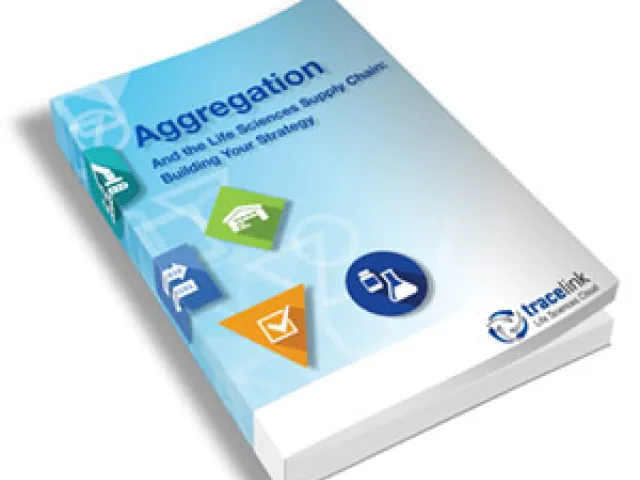
Aggregation and the Life Sciences Supply Chain: Building Your Strategy
Aggregation has the potential to add more complexity and cost to serialization, which already poses significant challenges to the life sciences supply chain.
View More
logipharma-white-paper-3d-image.jpg
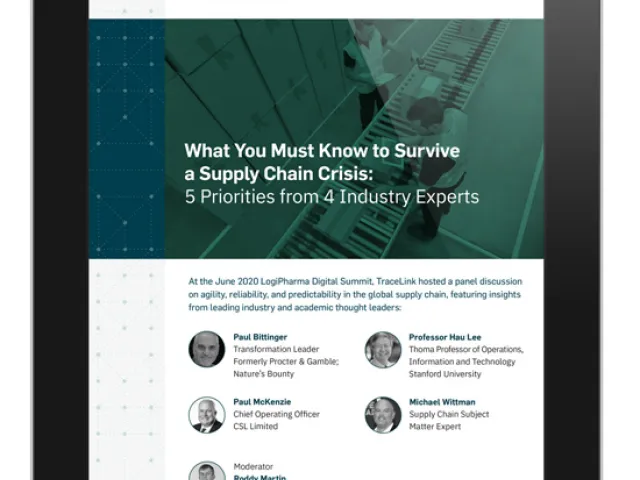
What You Must Know to Survive a Supply Chain Crisis: 5 Priorities from 4 Industry Experts
Read important insights on building agile supply chains and managing supply chain disruptions, from leading industry and academic thought leaders.
View More
cmo-webinar-resources.jpg
3M, Patheon, Reed-Lane, Sharp & Teva Share Serialization Strategies
Watch our webinar as 3M, Patheon, Reed-Lane, Sharp and Teva share best practices to help brands and CMOs accelerate their progress to November 2017.
View More
turning-point-3d-image-thumb.jpg
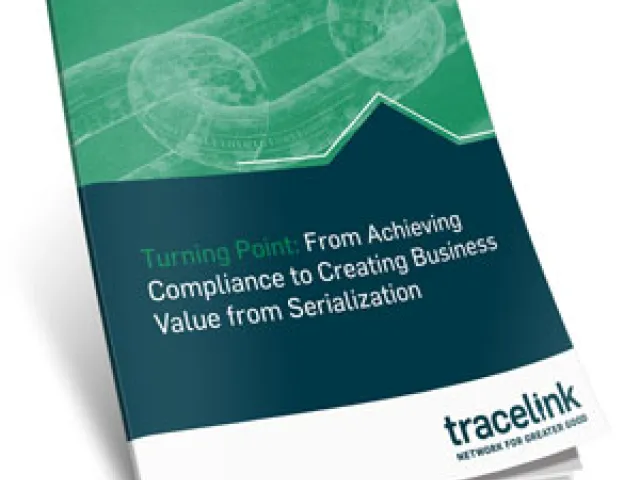
Turning Point: From Achieving Compliance to Creating Business Value from Serialization
FutureLink poll results reveal an industry at a turning point. Learn how stakeholders across the supply chain plan to create new business value and make the global drug supply more secure.
View More

Cookie Settings

When you visit any website, it may store or retrieve information on your browser, mostly in the form of cookies or similar tracking technologies. Please see below for an overview of the categories of cookies and similar technologies used on this site. You can allow or deny some of all of them, except Strictly Necessary Cookies which are required to provide the site to you. However, blocking some types of cookies may impact your experience of the site and services we are able to offer.

Please see our Cookie Policy for more details, including a list of the cookies we use. You can change your consent options at any time by following the “Cookie Settings” link in the Cookie Policy.
'Strictly Necessary' cookies let you move around the Site and use essential features like secure areas, shopping baskets and online billing. Without these cookies you would not be able to navigate between pages or use certain vital features of our Site, so we do not require your consent for their use. These cookies don't gather any information about you that could be used for marketing or remembering where you've been on the internet. For example, we use these Strictly Necessary cookies to identify you as being logged in to the Site. You can set your browser to block or alert you about these cookies, but if you do so, some parts of the Site will not work.
'Performance' cookies collect information about how you use the Site, such as which pages you visit, the time spent on the Site and if you experience any errors. We use performance cookies to provide aggregated statistics on how the Site is used and help us improve the Site including by measuring any errors that occur.
'Functional' cookies are used to provide services or to remember settings to improve your visit. We use 'Functionality' cookies to remember your settings and choices and show you when you're logged in to the Site.
‘Targeting' cookies are linked to services provided by third parties, such as 'Like' buttons and 'Share' buttons. The third party provides these services in return for recognizing that you have visited the Site. We also use 'Targeting' cookies to gather information that could be used to display content that we think may interest you.

Footer

  • Quick Links
    Get a Demo
    TraceLink Network Directory
    The Network
    OPUS Platform
    Technical Support
    Open Jobs
    API: Terms of Use
  • Products
    Multienterprise Information Network Tower
    U.S. DSCSA Compliance
    Targeted Recalls
    Process Orchestration for Empowered Teams
    Serialization
    Global Compliance
  • Resources
    Resource Center
    Events
    TraceLink University
    Partners
    Community
  • About TraceLink
    Our Story
    Newsroom
    Culture & Careers
    Leadership
    Our Values
    Corporate Social Responsibility
  • Hot Topics
    Transaction Integration
    Supply Chain Visibility
    DSCSA Compliance
    Process Orchestration
    Kazakhstan Compliance for Pharmaceuticals
    Kyrgyzstan Compliance for Pharmaceuticals
Follow Us on Social
Facebook
Linkedin
X
Legal & Trust.
© TraceLink Inc. 2009-2026 All Rights Reserved
Contact Us Today
Contact us today to begin your journey toward agentic supply chain orchestration — digitalize your end-to-end supply chain with intelligence, flexibility, and collaborative orchestration.
Contact Us
Stay Up-to-Date
Subscribe to receive industry insights and stay at the forefront of evolving trends.
Subscribe