
Home
  • AI Mode
  • Supply Chain Orchestration
    fast
    Supply Chain Orchestration
    • Life Sciences Company
    • Direct Material Supplier
    • Contract Manufacturer
    • Third Party Logistics
    • Wholesale Distributor
    • Healthcare Provider
    • Retail Pharmacy
  • Network
  • Products
    fast
    Products
    • Multienterprise Information Network Tower (MINT)
    • Process Orchestration for Empowered Teams (POET)
    • Track-and-Trace
  • Resources
    fast
    Resources
    • Resource Center
    • TraceLink University
    • Partners
    • Community
    • Events
  • About
    fast
    About
    • Our Story
    • Newsroom
    • Culture and Careers
    • Leadership
    • Our Values
    • Corporate Social Responsibility
    • Contact Sales
  • Log In
    • Tracelink Classic
      TraceLink Classic app.tracelink.com
      Redirect
    • Opus Platform
      Opus Platform opus.tracelink.com
      Redirect
Log In
  • Tracelink Classic
    TraceLink Classic app.tracelink.com
    Redirect
  • Opus Platform
    Opus Platform opus.tracelink.com
    Redirect
Resources

Breadcrumb

  1. Home
  2. Resources
  3. Resource Center

Aggregation 101: What It Means for Your Supply Chain

banner-image
  • Download PDF
  • Share
    • LinkedIn
    • Facebook
    • Mail
    • Twitter

Table of contents

When it comes to serialization, aggregation has the potential to add both complexity and cost to serialization projects, not only at the packaging line but throughout a manufacturer’s operations and the overall supply chain. Let's take a look at what it is, which markets require it, who it will affect, and how it should be factored into the serialization planning process.

What is aggregation?

Aggregation is the process of building a relationship between unique identifiers assigned to packaging containers. If you have a case with a serial number and within that case, saleable units (bottles, cartons, syringes, etc.) with their own unique serial numbers, aggregation enables you to associate “child” items with their bundle or case “parent”, building a “parent-child” relationship. The aggregation relationship is made up of those three things: the outer container identifier, the identifiers of the inner units, and the quantity of those units. Often packout configurations consist of multiple levels of hierarchy and may involve shelf packs, bundles, inner packs, shipper cases, pallets and even shipping containers. These are also sometimes referred to as “logistical units.”

If you need to determine the contents of a case but don’t want to open up the case and scan every unit, having aggregation in place lets you scan the case’s bar code to get its serial number and then use the aggregation relationship to infer the identity of all the contents. Inference involves looking at one level of packaging to infer information about the next level in the aggregation hierarchy, assuming that the case has not been opened and the data set representing the aggregation has not been altered. Without aggregation in place, you would need to open that case and scan all of the individual products. This is one of the reasons that aggregation can facilitate the material handling aspects of serialized projects in a warehouse environment.

In order for aggregation to truly be valuable and reliable, the integrity of both the physical and the accompanying data relationships needs to be trusted throughout its lifetime. That means that when something changes – cases are removed from a pallet, or part of a case is damaged – the original relationship needs to be disaggregated and then rebuilt and these changes or “events” need to be closely tracked to maintain the integrity of the parent-child relationships. Without the capability to perform exacting control of these hierarchies and account for each change, the risk is great that improperly serialized product will enter the supply chain.

What countries require it?

Aggregation has not been universally adopted as part of track and trace regulations. The current requirements for major markets include:

  • Brazil – For both phase one and phase two, required between transport container (case) and saleable unit
  • China – Required between all levels of sales packaging product up to but not including pallet
  • European Union – Not applicable, since only unit level serialization is required
  • India – A requirement is expected across all 3 levels of serialization, and the government’s 4/1/2015 update implied it will need to be maintained across supply chain movements
  • South Korea - Voluntary but encouraged and may emerge as a requirement when supply chain traceability is implemented
  • United States – Not mandated; will be officially studied as part of unit-level traceability preparations and may become industry requirement
  • Turkey – Required between unit level and transport units (cases) 

What aggregation means for different supply chain segments

While aggregation has the potential to create efficiencies across the entire supply chain, it also represents significant cost to the packaging process. For anyone downstream of the product manufacturer, the ability to infer contents based on the identity of a larger container is advantageous for receiving, put away, inventory management, and pick, pack, and ship procedures.

But while wholesale distributors, repackagers, and pharmacy chains with central distribution centers see most of the benefits, the cost burden for initiating aggregation falls almost entirely on manufacturers, making many understandably reluctant. To learn what is involved for manufacturers and how they should determine their aggregation strategy, read "What Aggregation Would Mean for You.”
BlogSerial Number ManagerGlobal Track & TraceSerializationBrazil, China, European Union, Russia, United States

Table of contents

Subscribe to Agile Supply Chain Insights
Subscribe to stay informed with the latest patient-centric agile supply chain thought leadership content.
More Serialization and Compliance Resources
3d-aggregation-ebook-cover-small.jpg
Aggregation and the Life Sciences Supply Chain: Building Your Strategy
Aggregation has the potential to add more complexity and cost to serialization, which already poses significant challenges to the life sciences supply chain.
View More
wd-warehouse-agg-small.png
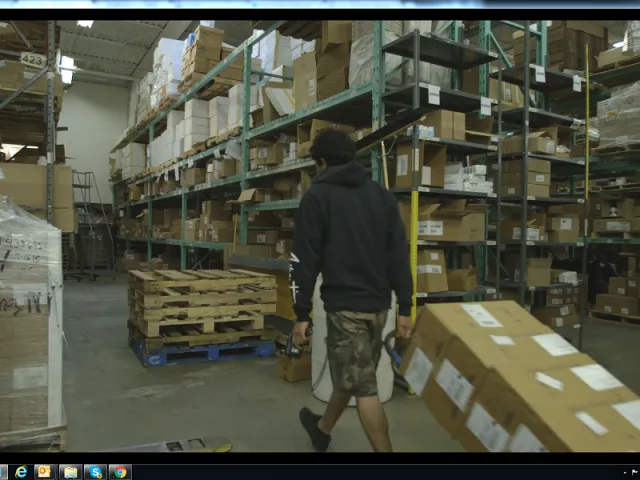
Aggregation: Why is it Such a Hot Topic?
While aggregation isn’t a regulatory requirement in the U.S., understand how the expectations of your wholesale distributor customers may impact your aggregation plan.
View More
flbposter_nestle-thumbnail.png
Case Study: Nestlé Skin Health | Benefits of Aggregation as a Standard
Learn how Nestlé Skin Health uses Edge Track to support their aggregation goals.
View More
check-point.jpg
Poll: Validation Has Huge Time and Cost Impact
Find out how many internal resources companies are dedicating to, and how much they're spending on track and trace system validation.
View More
brand-cmo-serialization-partnerships-large.jpg
TraceLink: The World's Largest Integrated Digital Supply Network
TraceLink's network digitally connects the end-to-end pharmaceutical supply chain. See the infographic.
View More
blue-clock-over-numbers.jpg
500 Days Until EU FMD: How Prepared is the Industry?
From 9th February 2019, companies will need to comply with the EU FMD requirements for prescription medicines in Europe. Today marks 500 days until it comes into force.
View More

Cookie Settings

When you visit any website, it may store or retrieve information on your browser, mostly in the form of cookies or similar tracking technologies. Please see below for an overview of the categories of cookies and similar technologies used on this site. You can allow or deny some of all of them, except Strictly Necessary Cookies which are required to provide the site to you. However, blocking some types of cookies may impact your experience of the site and services we are able to offer.

Please see our Cookie Policy for more details, including a list of the cookies we use. You can change your consent options at any time by following the “Cookie Settings” link in the Cookie Policy.
'Strictly Necessary' cookies let you move around the Site and use essential features like secure areas, shopping baskets and online billing. Without these cookies you would not be able to navigate between pages or use certain vital features of our Site, so we do not require your consent for their use. These cookies don't gather any information about you that could be used for marketing or remembering where you've been on the internet. For example, we use these Strictly Necessary cookies to identify you as being logged in to the Site. You can set your browser to block or alert you about these cookies, but if you do so, some parts of the Site will not work.
'Performance' cookies collect information about how you use the Site, such as which pages you visit, the time spent on the Site and if you experience any errors. We use performance cookies to provide aggregated statistics on how the Site is used and help us improve the Site including by measuring any errors that occur.
'Functional' cookies are used to provide services or to remember settings to improve your visit. We use 'Functionality' cookies to remember your settings and choices and show you when you're logged in to the Site.
‘Targeting' cookies are linked to services provided by third parties, such as 'Like' buttons and 'Share' buttons. The third party provides these services in return for recognizing that you have visited the Site. We also use 'Targeting' cookies to gather information that could be used to display content that we think may interest you.

Footer

  • Quick Links
    Get a Demo
    TraceLink Network Directory
    The Network
    OPUS Platform
    Technical Support
    Open Jobs
    API: Terms of Use
  • Products
    Multienterprise Information Network Tower
    U.S. DSCSA Compliance
    Targeted Recalls
    Process Orchestration for Empowered Teams
    Serialization
    Global Compliance
  • Resources
    Resource Center
    Events
    TraceLink University
    Partners
    Community
  • About TraceLink
    Our Story
    Newsroom
    Culture & Careers
    Leadership
    Our Values
    Corporate Social Responsibility
  • Hot Topics
    Transaction Integration
    Supply Chain Visibility
    DSCSA Compliance
    Process Orchestration
    Kazakhstan Compliance for Pharmaceuticals
    Kyrgyzstan Compliance for Pharmaceuticals
Follow Us on Social
Facebook
Linkedin
X
Legal & Trust.
© TraceLink Inc. 2009-2026 All Rights Reserved
Contact Us Today
Contact us today to begin your journey toward agentic supply chain orchestration — digitalize your end-to-end supply chain with intelligence, flexibility, and collaborative orchestration.
Contact Us
Stay Up-to-Date
Subscribe to receive industry insights and stay at the forefront of evolving trends.
Subscribe