Table of contents
Key Takeaways
- Without legacy systems and landlines, developing countries are adopting a “digital first” strategy
- Many countries’ regulatory agencies are encouraging digital innovation
- There’s an opportunity to use supply chain visibility to build the case for serialization and compliance.
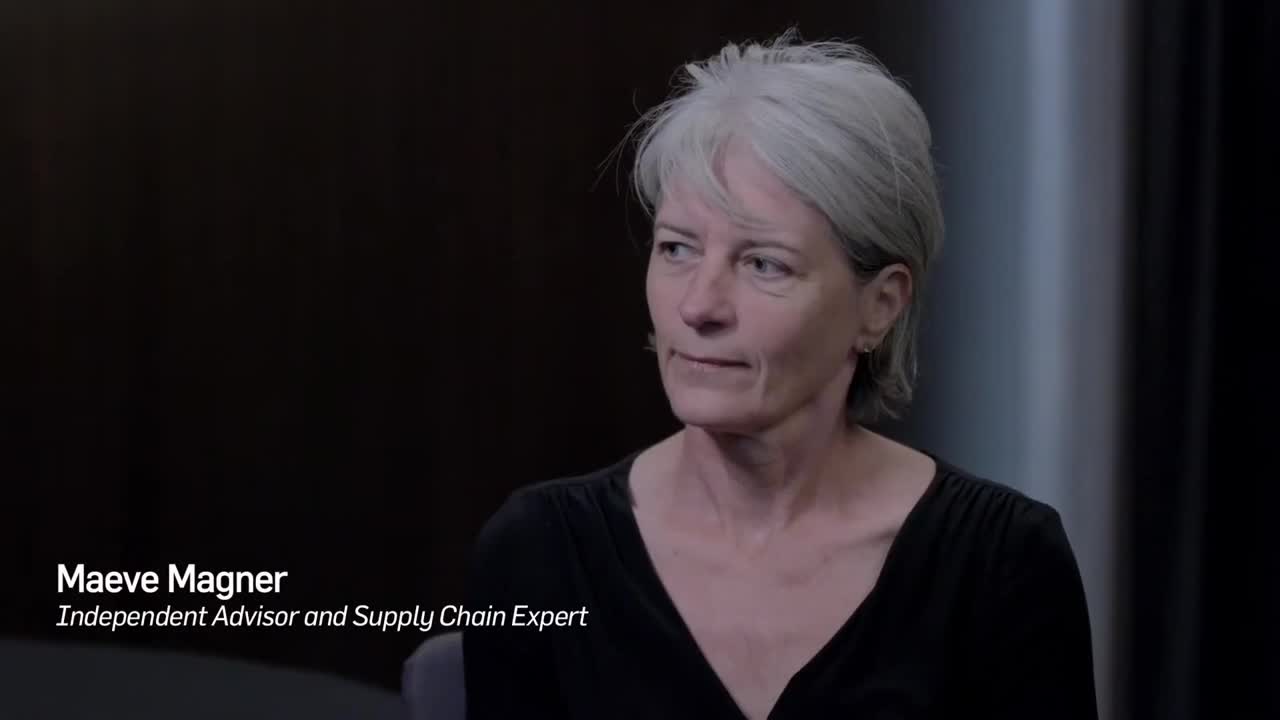
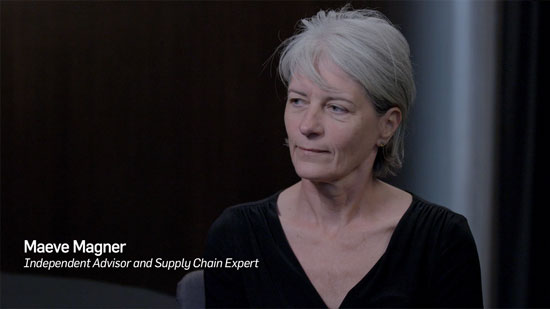
Supply chain expert Maeve Magner talks to TraceLink’s Roddy Martin about how developing countries are adopting new supply chain technologies to drive better patient outcomes. In her work with The Bill and Melinda Gates Foundation and the Asia Development Bank, Magner has developed a uniquely forward-looking perspective on the advantages that emerging markets may have as they begin their serialization initiatives—and the lessons they may offer to the global pharmaceutical supply chain.
Roddy Martin: Maeve, it's exciting to talk to somebody who's been through not only electronic supply chains but has led supply chain work. Maybe you'd like to introduce yourself, and then let's talk about this challenge of morphing a serialization company that's seen as good in regulatory compliance. We're now going to be talking supply chain.
Maeve Magner: For me, my technical background is supply chain and logistics. I have worked in the high-tech industry for over 20 years and then moved into the development space. What's been interesting for me in working in high tech and then going to international development is that working for organizations like Dell, they were very much ahead of their game.
Yet, when I moved into global health, not only working in third world countries but working with pharmaceutical companies, life sciences, I felt like that I had gone back about 20 years. [laughs] I really felt like that there was a lot of the basics of the supply chain that were actually not in place.
Yet, they were all trying to build sophisticated systems when a foundation didn't exist. It's been an interesting journey. Today, I work as an independent adviser, and I work for organizations like Gaby, Bill & Melinda Gates Foundation, and the Asian Development Bank.
I also work with a lot of pharma companies and also a lot of startups, basically looking at how innovation, and especially digitization, can be adopted and scaled in developing countries. Doing a lot of work in Papua New Guinea, Nigeria, Kenya, Tanzania, so on, and so forth.
What's interesting about those is that those countries don't have legacy systems. Their regulatory systems are a little bit easier to advocate for the reasons and the advantages of adopting digitization.
You're starting to see that there's a lot more work and effort being done around data, around digital solutions and innovation in these countries that I think actually will be beneficial to developing countries.
It's also getting these pharma companies more involved and getting them into a space to where they can see the reality of how this can actually be implemented.
Roddy: Digital and emerging markets, is that a no‑brainer? I know there's been instances where, like the drone story in Rwanda, where they prepared to experiment with digital technologies. Talk a little about that, because I think that's what makes this exciting, is the fact that they have so far to go. If they have the courage to leap, the technology is there to help them.
Maeve: Yeah, and I think there's a couple of points around that. One, I think, when you look at developing countries, they've made one of the biggest leapfrogs in terms of telecommunications. They've just totally bypassed landlines, and they've gone straight to mobile.
The adoption of mobile has been significant. That is actually driving a lot of different development of apps. It's driving a lot of virtual communications and that. I think one great example is mobile money. M‑Pesa has been around, I think, for about 10 years now.
Yet in the US and Europe, we're still slowly catching on with some of that payments. You mentioned drones. There are many governments, not just in Rwanda, but also Tanzania, Ghana, Vanuatu, even Papua New Guinea as well.
They've done trials with using drones for medicine delivery. Not just medicines, but also, for blood as well, too. They're developing regulations around that and policies around that, all of which, again, I think that the developed countries can leverage.
I think there is a big appetite. Some of the challenges, though, are that the disadvantage of not having legacy systems is their approach to data and their approach to processes are not as mature as they need to be.
I think we all agree that there's no point in implementing solutions, any kind of technical solution, unless you have the appropriate processes and the appropriate skills in place. I do think, as well, there are opportunities to accelerate though.
I feel very fortunate working in supply chain and having come from the high-tech industry. I think it is the one discipline where we have this advantage of hindsight, because different industries have performed and have matured their supply chains at different paces.
We have the advantage of looking to challenges that P&G had. We have the advantages of looking at the challenges that the high-tech industry has. In the developing countries, we have the opportunity to look at the challenges that life sciences and everybody else have.
We can actually apply what we learn to that, so we can actually accelerate much quicker. You talked about the challenges for TraceLink, moving from this regulatory serialization focus to supply chain visibility. I think what's really interesting in these developing markets is that the regulatory challenges are there, but there's a learning that's needed.
Or there's an awareness that's needed around the value of serialization and how to get there in a more informed way. I think what we see, the optics that we're seeing, is that Europe has struggled with it. US has struggled with it.
I think a lot of the regulatory agencies are a little bit gun‑shy on it. I think that there's a very, very unique opportunity to use the supply chain visibility as the entry point and building that foundation for the serialization.
You almost flip it. TraceLink has an opportunity to go supply chain visibility, end‑to‑end visibility first, and do the serialization after that. Because they are so good at the serialization, they can actually build that supply chain visibility on the back of that.
Roddy: I think we're in fascinating times, because technology is just as available to emerging markets as it is to established markets. There's no constraint to deploying this, buying and deploying it. That's really exciting.
Maeve: It is. I think also, there's a couple of drivers as well that are worth looking at. When we look at the amount of money that's being spent on medicine, procurement in a lot of low‑middle income countries, there is significant, there's billions every year from UNICEF, from USAID, from the global fund from Gaby that's being spent.
In addition to that, there's also hundreds of millions that's being spent on improving the supply chain. The reason that we're seeing this supplemental money going into strengthening the supply chains is because the focus has always been on, "Let's buy medicines. Let's get them into the country," but not necessarily focusing on getting them to the patient.
Now, there's this realization that they need to build out these systems to ensure that the medicines are getting to where they need to get to, but they don't have the visibility. They get reports. It's very much paper‑based systems.
They get reports that are two or three months behind. They're realizing that's not helping in terms of the planning. They're addressing some stock‑outs and some wastage, but not the way that they need to be doing it.
Now, there's a big focus on how do we take the inefficiencies out of the systems that are there and ensure that the products are getting to the patients?
Roddy: To do that, you have to look at the process. I think that's what the exciting part is.
Maeve: I think there's a lot of value that can be brought back into some of the developed countries as well, too, in actually deploying the solutions, getting that visibility, and then looking at how that data can actually be used. Given the trajectory for some of the companies, I think there's possibilities that that can actually be achieved quicker in some of these developing countries.
As Chief Digital Strategist at TraceLink, Roddy Martin is responsible for guiding TraceLink’s business transformation initiatives through his expertise and insight into change management and end-to-end digital supply chain strategy.
Return to: The Patient-Driven Supply Network