
Register for FutureLink Barcelona 2026 Today→
TraceLink — Network for Greater Good
AI Mode Agents AI Solutions Network Resources About
LOG IN TraceLink Classic OPUS Platform
Resources

Breadcrumb

  1. Home
  2. Resources
  3. Resource Center

Virtual Teams of Subject Matter Experts Eliminate Confusion in Supply Chain Issue Resolution

banner-image
  • Download PDF
  • Share
    • LinkedIn
    • Facebook
    • Mail
    • Twitter

Table of contents

Key Takeaways
  • Over escalation complicates issue resolution, slowing the process and delaying improvements.
  • APT-SCIM offers a new approach, enabling you to dynamically create virtual teams of internal and external experts to solve issues quickly.


By Nicholas Gasse

Agile Process Teams for Supply Chain Issue Management (APT-SCIM) enables you to digitally and dynamically create process teams on demand within an easy-to-use web or mobile interface.

Supply chain issues, if left unresolved, can quickly paralyze a supply chain. However, it’s not always clear which stakeholders should be part of cross-functional and cross-enterprise teams formed to resolve an issue. This lack of clear accountability leads to confusion over roles, responsibilities, and how teams should respond. It also results in reporting delays because team members may not know who needs to be informed when issues are identified.

While there are several reasons for this confusion, one of the biggest impediments is poor communication. When the bulk of communication happens via email, it’s easy for issues to get “over escalated.” This occurs when so many people are copied across every email that it becomes difficult to determine who is accountable for each step in the resolution process, and whether certain action items require a response or approval before moving forward.

Creating “process teams”—virtual teams of specific internal and supply chain partner subject matter experts—eliminates this confusion. Process teams enable businesses to make sure issues are routed to the right team members and at the right time throughout the issue management process.
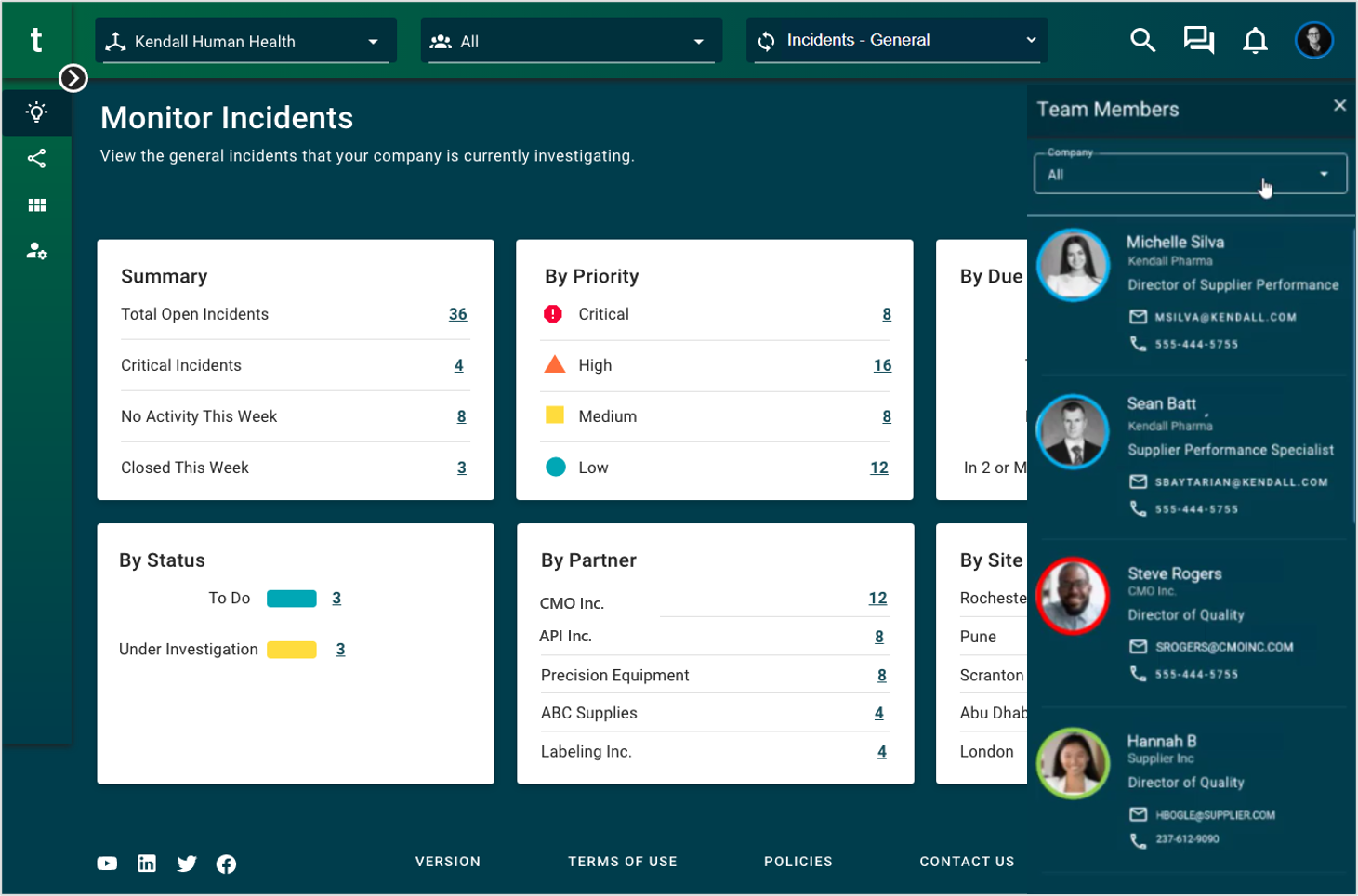
 

Agile Process Teams for Supply Chain Issue Management (APT-SCIM) enables you to digitally and dynamically create process teams on demand within an easy-to-use web or mobile interface. This adds much-needed structure and centralization to communication, improving the efficiency of managing the issue resolution process with workflow-driven assignments. 

By streamlining communication and rapidly engaging with virtual internal and external teams, organizations are better able to:

  • Ensure the right subject matter experts are engaged immediately.
  • Speed issue resolution times across the board.
  • Make the issue resolution process more structured and repeatable.

APT-SCIM makes assembling process teams easy and is a very effective way to build stronger relationships with supply chain partners, enabling you to more quickly respond to a wide variety of issues.

Learn Want to learn more? Download our supply chain issue management best practices handbook today.
 

Learn more in our Supply Chain Issue Management Resource Center.

<a href="/category/blog" hreflang="en">Blog</a><a href="/category/supply-chain-collaboration" hreflang="en">Supply Chain Collaboration</a><a href="/category/supply-chain" hreflang="en">Supply Chain</a>

Table of contents

Download the Supply Chain Issue Management Best Practices Handbook!
Fill out the form to download the eBook now.
 

Thank you. Check your email for a copy of the content you requested.

Related Content
warehouse-technology
Collaborate with Contract Manufacturers Like They Are Part of Your Company
Find out how to use digital technology to bridge the gaps between your organization and its contract manufacturers and resolve supply chain issues rapidly.
View More
Supply Chain Issue Management
Reduce Defects per Million by As Much As 96% with Continuous Improvement
TraceLink Agile Process Teams for Supply Chain Issue Management (APT-SCIM) provides a digital foundation for continuous process improvement through methodologies like Six Sigma and Lean by providing a systematic approach to issue management.
View More

Cookie Settings

When you visit any website, it may store or retrieve information on your browser, mostly in the form of cookies or similar tracking technologies. Please see below for an overview of the categories of cookies and similar technologies used on this site. You can allow or deny some of all of them, except Strictly Necessary Cookies which are required to provide the site to you. However, blocking some types of cookies may impact your experience of the site and services we are able to offer.

Please see our Cookie Policy for more details, including a list of the cookies we use. You can change your consent options at any time by following the “Cookie Settings” link in the Cookie Policy.
'Strictly Necessary' cookies let you move around the Site and use essential features like secure areas, shopping baskets and online billing. Without these cookies you would not be able to navigate between pages or use certain vital features of our Site, so we do not require your consent for their use. These cookies don't gather any information about you that could be used for marketing or remembering where you've been on the internet. For example, we use these Strictly Necessary cookies to identify you as being logged in to the Site. You can set your browser to block or alert you about these cookies, but if you do so, some parts of the Site will not work.
'Performance' cookies collect information about how you use the Site, such as which pages you visit, the time spent on the Site and if you experience any errors. We use performance cookies to provide aggregated statistics on how the Site is used and help us improve the Site including by measuring any errors that occur.
'Functional' cookies are used to provide services or to remember settings to improve your visit. We use 'Functionality' cookies to remember your settings and choices and show you when you're logged in to the Site.
‘Targeting' cookies are linked to services provided by third parties, such as 'Like' buttons and 'Share' buttons. The third party provides these services in return for recognizing that you have visited the Site. We also use 'Targeting' cookies to gather information that could be used to display content that we think may interest you.
Register for FutureLink Barcelona 2026 Today→
TraceLink — Network for Greater Good
Log In OPUS Platform · TraceLink Classic
AI Mode
Featured Report The Agentic Supply Chain Operating Model →

Agentic Business Processes

External Manufacturing Logistics Transportation Commerce Compliance

Products

Digital Transaction Exchange Process Collaboration Global Track-and-Trace Regulatory Compliance Real-Time Intelligence

Resources

Resource Center TraceLink University Partners Community Customers Events

About TraceLink

Newsroom Culture & Careers Open Jobs Legal & Trust Center Corporate Social Responsibility Network Directory Glossary

Hot Topics

Eliminate Stockouts Improve OTIF Reduce Costs Increase End-to-End Visibility Accelerate Order-to-Cash Optimize Inventory Levels Scale Cross-Partner Execution
Need assistance? Contact Technical Support→

Contact Us Today

Transform your supply chain operations with a human-agent workforce.

Contact Us →

Stay Up-to-Date

Subscribe to receive industry insights and evolving trends.

Thanks — you're subscribed.

© TraceLink Inc. 2009–2026 All Rights Reserved