
Table of contents

A New Operating Model Changes the Economics of Supply Chain Work
Regulated supply chains still depend on human teams monitoring operations, investigating exceptions, gathering information from fragmented systems, and coordinating decisions across trading partners. As supply networks become more complex, that manually coordinated operating model cannot scale with the speed, consistency, governance, and control the business and their customers require.
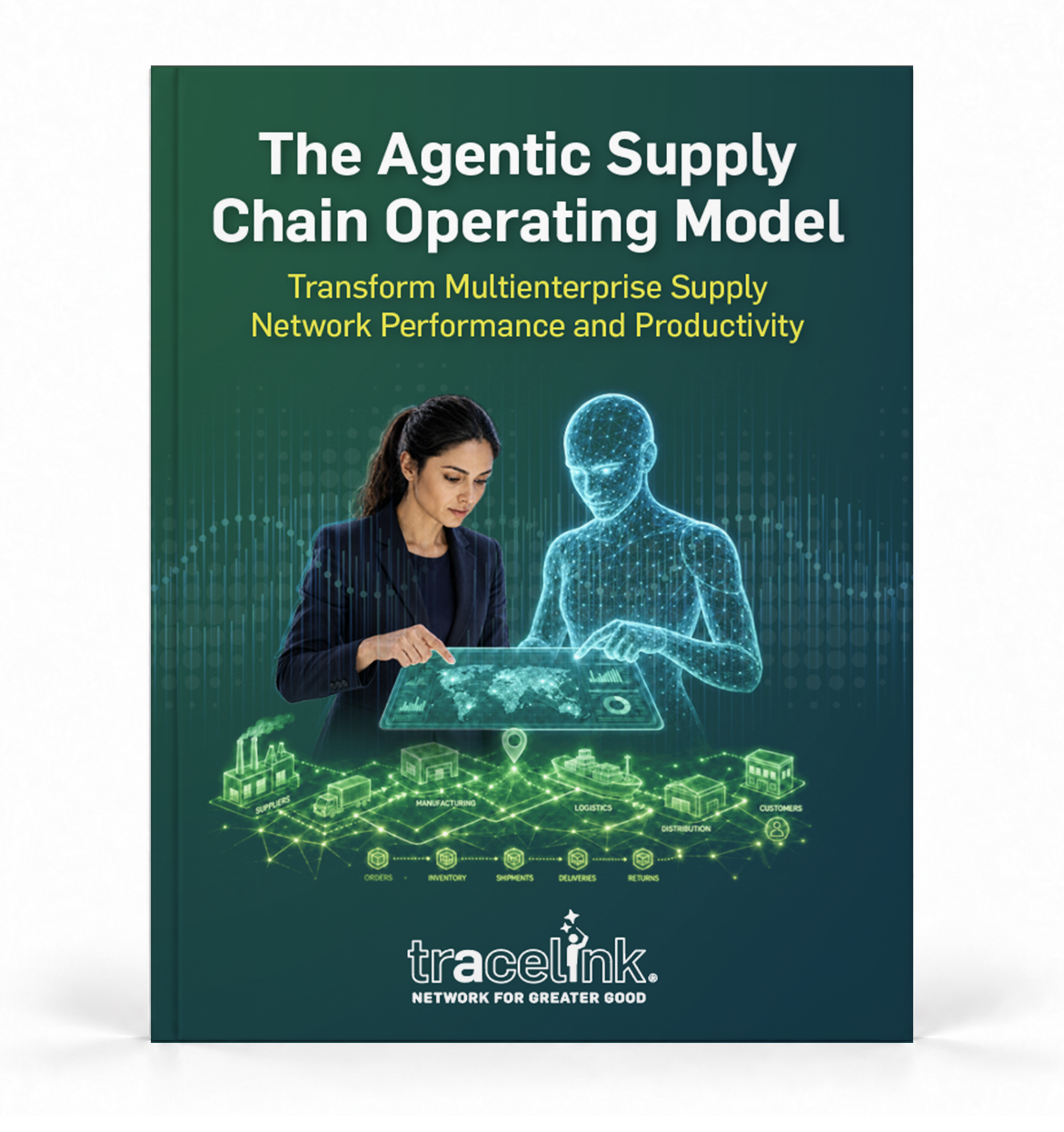
TraceLink powers the transformation to an Agentic Supply Chain Operating Model that combines human expertise with agentic work. The Agentic Supply Chain Operating System, built on the OPUS Platform, provides the software foundation. Agentic Business Processes coordinate human teams and governed OPUS Agents; Agentic Control Towers provide the knowledge, intelligence, reasoning, and operational context for governed work; and the Integrate-Once Agentic Business Network provides the trusted multienterprise foundation.
What You’ll Learn
| 01 | The financial case for transformation How an elastic model can expand capacity and improve productivity, service, revenue, and resilience. |
| 02 | Transactions become catalysts for intelligent work How business events initiate governed work across human teams, OPUS Agents, systems, and partners. |
| 03 | Human accountability remains central How governance, judgment, transparency, traceability, and auditability are embedded in every process. |
| 04 | Intelligence and network context provide the foundation Why Agentic Control Towers and the Integrate-Once Agentic Business Network are essential to governed multienterprise work. |
| 05 | Operational memory compounds advantage How each cycle strengthens knowledge and improves future performance. |
Download the paper to see how leaders can redesign supply chain work, create enterprise value, and compound advantage over time.