Table of contents
Key Takeaways
-
The COVID-19 pandemic reminds us that it's time to rethink the healthcare supply chain.
- The internet of things (IoT) will be crucial to securing and optimizing the supply chain for the future.
- The foundation for IoT-based supply chain optimizations is being put in place today.
By Jamshed Dubash | April 8, 2020

The COVID-19 pandemic is a stark reminder that the need to protect life-saving medicines, vaccines, and medical equipment from counterfeiting, theft, and diversion has never been greater. What’s also clear is that technologies like the internet of things (IoT) and smart connected devices will be critical to providing the security and monitoring necessary to safeguard the pharma supply chain for the future.
It didn’t take long for bad actors to emerge with bogus COVID-19 medicines and counterfeit test kits in an effort to take advantage of patients and capitalize on the crisis. But this is just a small fraction of the criminal activity that happens in the pharmaceutical supply chain each day.
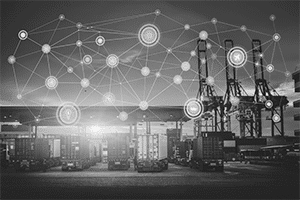
IoT enables real-time visibility into the location and condition of products and equipment at all levels of the supply chain—and that can help companies increase security. But visibility alone isn’t enough. Companies also need the ability to learn about and quickly respond to anomalies which could indicate criminal activity. The next step after achieving real-time visibility with IoT is achieving real-time monitoring.
Getting to that level will be challenging because pharma supply chain companies continue to wrestle with legacy business practices that limit their ability to achieve real-time monitoring, as well as their ability to work together in real time to improve patient outcomes. These include things like:
- Manual data sharing between trading partners
- Siloed data and incomplete visibility into product location and condition
- Inaccurate or outdated product consumption data
The good news is that the combination of IoT and a vast digital network of trading partners can help companies overcome those challenges. And the groundwork for improving the security of the supply chain and ensuring better patient outcomes through IoT is already being put in place today.
From smart glucose monitors and ingestible sensors to connected inhalers and remote biometrics scanners, IoT is enabling healthcare professionals to understand patient needs better than ever before. IoT is also transforming the way medicines are manufactured, distributed, and dispensed—and it’s on track to help the pharma industry achieve its goal of creating truly patient-centric supply chains.
To be effective, IoT data requires an enabling technology that lets organizations break down data silos and share operational insights. That’s where the network comes in. Here is a look at five key supply chain processes and the impact that the formidable combo of IoT and digital networking will have on them. I’m looking forward to exploring these ideas in more detail in future installments of The Patient-Driven Supply Network.
Demand forecasting
Manufacturers meet demand for medicines by analyzing several factors, including data related to availability of raw materials, lead times to receive supplies, and product consumption data, to name a few. The problem is that each of these factors are dynamic and can change without warning.
With IoT-based connections into a digital supply network, stakeholders can seamlessly share information about raw materials, lead times, and product consumption data in real time. That improved visibility could enable manufacturers to respond to spikes in demand like the COVID-19 pandemic with greater agility and plan for inventory needs more effectively.
Manufacturing
Use cases for IoT in pharmaceutical manufacturing range from active product ingredient (API) tracking to equipment monitoring and factory optimization. For example, manufacturers use IoT sensors to protect factory equipment from failure. IoT sensors—which are used to monitor pressure gauges, compressors, temperature, and more—enable manufacturing systems to identify potential problems before they happen.
Insights gleaned from IoT data can easily be shared with equipment providers and maintenance partners and can then be used to optimize or automate preventative maintenance processes.
Packaging
Connected technologies have led to a sea change in product packaging. For example, today’s “smart packaging” solutions can help patients validate the authenticity of medicine. They can also encourage better outcomes by alerting patients when it’s time to take medication.
Additionally, IoT sensors provide pharma companies with real-time data about the location and status of products as they undergo packaging procedures.
Transportation and warehousing
The pharmaceutical industry loses billions each year due to environmental excursions during product transit and storage. With the growing industry focus on precision medicines, which often have exacting environmental control requirements, the need to protect shipments is more important than ever.
Typical methods for monitoring excursions involve proprietary devices and sensors, siloed data sets, and error-prone manual processes. But with IoT-enabled sensors monitoring vehicles and storage facilities over a digital supply network, trading partners can work together proactively to reduce product losses.
For example, IoT enables real-time tracking of delivery vehicle location and product condition, enabling manufacturers to optimize delivery routes, ensure product stays within allowed condition requirements, guard against diversion, and avoid demurrage. These capabilities are especially valuable when transporting or storing high-value products like vaccines and biologics that may be temperature sensitive and in short supply.
Dispensation
IoT is helping pharmacies and hospitals spend less time managing the flow of medications and more time focusing on the patient. For example, RFID-enabled trays help surgical teams ensure they have the right tools for each procedure.
Network connections between manufacturers and dispensers will also lead to more accurate consumption data and inventory planning. Additionally, IoT helps hospitals and their suppliers ensure that equipment is continually monitored and that product deliveries make it to the right location within the hospital. Most importantly, IoT helps the pharma supply chain ensure that the right patient gets the right medication at the right time.
Getting started
The COVID-19 crisis has shown us that it’s time to rethink the pharmaceutical supply chain—and IoT will be crucial to making much-needed improvements. But the journey to a fully IoT-enabled supply chain will be complex and won’t happen overnight. That’s why it’s important to work with internal teams and supply chain partners to evaluate where IoT will have the greatest impact today.
It’s also important to select a technology partner with a track record of ensuring seamless network connectivity between trading partners. IoT has been around for a long time now—but getting the most out of it requires a powerful digital network platform. That is the fastest route to ensuring better patient outcomes through IoT.
Jamshed Dubash is General Manager of TraceLink's Smart Supply, Logistics & IoT business unit.
Return to: The Patient-Driven Supply Network