
Register for FutureLink Barcelona 2026 Today→
TraceLink — Network for Greater Good
AI Mode Agents AI Solutions Network Resources About
LOG IN TraceLink Classic OPUS Platform
Resources

Breadcrumb

  1. Home
  2. Resources
  3. Resource Center

Medicines Traceability Across the Gulf: Understanding Key Compliance Differences

By Allan Bowyer, Senior Director, Industry and Community, TraceLink
banner-image
  • Download PDF
  • Share
    • LinkedIn
    • Facebook
    • Mail
    • Twitter

Table of contents

In 1981, Bahrain, Kuwait, Oman, Qatar, Saudi Arabia, and the United Arab Emirates (UAE) established a cooperative union called the Gulf Cooperation Council (GCC). While the formal objectives of the GCC include harmonization of regulations, this article looks at key similarities and differences to help pharmaceutical companies manage compliance for medicines traceability. It is important to note that each country has its own legal structure, regulatory oversight, and traceability event reporting system.

Country
Serialization
Traceability Reporting
BahrainRequiredRequired
KuwaitRequired as of January 2024Under discussion
OmanRequiredNo
QatarUnder discussion (currently barcoding only)Under discussion
Saudi ArabiaRequiredRequired
UAERequiredRequired

Adherence to GS1 standards
Much to the relief of pharmaceutical companies operating on a global scale, the GCC countries have adopted GS1 standards for barcoding, serialization, and aggregation. Traceability reports themselves, however, exhibit differences, most notably in how (or if) the EPCIS standard has been implemented.

Saudi Arabia gets traceability underway
Of the six GCC countries, the relatively populous Saudi Arabia got the earliest start in implementing mandatory traceability for pharmaceuticals with its Drug Track & Trace System, which was modeled on that of Turkey. An adjunct service called “PTS” is used to communicate between supply chain stakeholders to manage, among other things, shipment notifications and product aggregation relationships in those shipments.

Bahrain and UAE traceability
Traceability systems that followed in Bahrain and in the UAE are EPCIS-based, though as noted above, with important differences in how the standard was implemented as well as in the scope and breadth of the reports. These two countries’ systems integrate with the GS1 UAE platform “BrandSync” to source product master data, requiring manufacturers and local agents to coordinate master data ownership and update processes.

GCC medicines outlook
With Kuwait serialization requirements scheduled to go into effect in January 2024, TraceLink believes that traceability reporting will not be far behind in that country. Discussions in Oman and Qatar, while not yet at the legislative stage, will also likely lead to a phased barcoding—serialization—traceability approach.

We also expect GCC cooperation to strengthen further. In February 2023, the Gulf Health Council announced work on an Electronic Patient Information Leaflet “e-PIL” project, which will provide the public with updated, electronic, and harmonized information about medicines throughout the region.

The challenge of stakeholder-to-stakeholder data transfer
Sometimes referred to as “horizontal integration”, exchanging data with trade partners is often an operational necessity, even if it is not a regulatory requirement. Such functionality is out of scope for government-run traceability systems—they focus on complying with the stakeholder-to-central-system reports dictated by the law and relevant guidelines.This lack of horizontal data exchange can create challenges for manufacturers beyond compliance and has an even greater impact on downstream wholesalers.

One of the key challenges for manufacturers is ensuring the correctness and timeliness of data reported to the various countries’ traceability systems. For example, some manufacturers rely on local logistics partners to trigger shipment reports once those goods clear the free-trade zone (FTZ) and enter the commercial supply chain. Since authorities require a one-to-one match of the electronic report with the physical packs imported, precision and efficiency are paramount.

The TraceLink Business-to-Network, Integrate-Once capability enables companies and their supply chain partners to begin exchanging this business information through a single integration to the TraceLink network. After this initial integration, you can easily configure connections to any other partner on the network and begin exchanging any transaction supported by TraceLink. Scale new trade partner connections to support your business needs, without worrying about integration maintenance costs or disruption from partner system changes.

By leveraging the Business-to-Network, Integrate-Once capability, TraceLink Multienterprise Information Network Tower (MINT) improves end-to-end visibility and collaboration with all supply chain partners through real-time communication of business information. MINT supports commercial transaction exchange with trade partners across the pharmaceutical supply chain, and can enable horizontal integration for sharing serialization data.


 

<a href="/category/blog" hreflang="en">Blog</a><a href="/category/us-drug-supply-chain-security-act" hreflang="en">US Drug Supply Chain Security Act</a><a href="/category/dscsa-manufacturers" hreflang="en">DSCSA for Manufacturers</a>, <a href="/category/supply-chain-visibility" hreflang="en">Supply Chain Visibility</a>

Table of contents

Contact TraceLink to learn more about MINT!
Fill out the form to contact us now.
 

Thank you for contacting us! We’ll be in touch shortly.

Related Content
network
LogiPharma Europe: TraceLink Launches MINT, the Multienterprise Information Network Tower to Power End-to-End, Real-Time Supply Chain Visibility and Digitalization
Learn about TraceLink Multienterprise Information Network Tower (MINT), a groundbreaking new supply chain visibility, collaboration, and intelligence solution.
View More
lucy-reporting-thumb.png
Preparing for Saudi Arabia Compliance Reporting
TraceLink SVP of Product Marketing, Lucy Deus, provides an in-depth review of the January 2019 Saudi reporting requirements for pharma supply chains.
View More
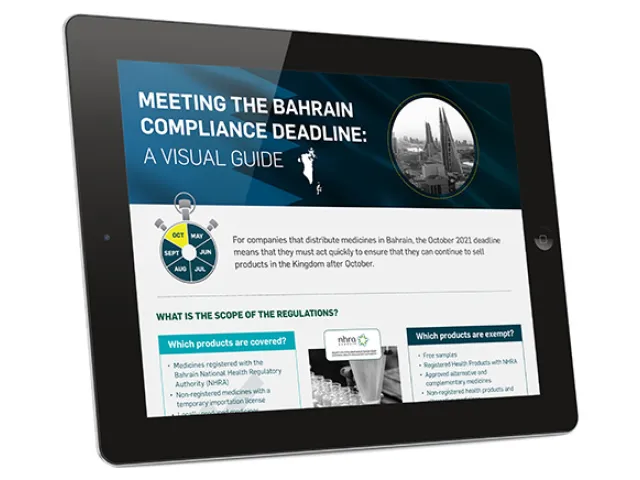
thumbnail of Bahrain compliance infographic shown in tablet
Meeting The Bahrain Compliance Deadline: A Visual Guide
Download this visual guide to understand Bahrain requirements, deadlines, and who must comply.
View More

Cookie Settings

When you visit any website, it may store or retrieve information on your browser, mostly in the form of cookies or similar tracking technologies. Please see below for an overview of the categories of cookies and similar technologies used on this site. You can allow or deny some of all of them, except Strictly Necessary Cookies which are required to provide the site to you. However, blocking some types of cookies may impact your experience of the site and services we are able to offer.

Please see our Cookie Policy for more details, including a list of the cookies we use. You can change your consent options at any time by following the “Cookie Settings” link in the Cookie Policy.
'Strictly Necessary' cookies let you move around the Site and use essential features like secure areas, shopping baskets and online billing. Without these cookies you would not be able to navigate between pages or use certain vital features of our Site, so we do not require your consent for their use. These cookies don't gather any information about you that could be used for marketing or remembering where you've been on the internet. For example, we use these Strictly Necessary cookies to identify you as being logged in to the Site. You can set your browser to block or alert you about these cookies, but if you do so, some parts of the Site will not work.
'Performance' cookies collect information about how you use the Site, such as which pages you visit, the time spent on the Site and if you experience any errors. We use performance cookies to provide aggregated statistics on how the Site is used and help us improve the Site including by measuring any errors that occur.
'Functional' cookies are used to provide services or to remember settings to improve your visit. We use 'Functionality' cookies to remember your settings and choices and show you when you're logged in to the Site.
‘Targeting' cookies are linked to services provided by third parties, such as 'Like' buttons and 'Share' buttons. The third party provides these services in return for recognizing that you have visited the Site. We also use 'Targeting' cookies to gather information that could be used to display content that we think may interest you.
Register for FutureLink Barcelona 2026 Today→
TraceLink — Network for Greater Good
Log In OPUS Platform · TraceLink Classic
AI Mode
Featured Report The Agentic Supply Chain Operating Model →

Agentic Business Processes

External Manufacturing Logistics Transportation Commerce Compliance

Products

Digital Transaction Exchange Process Collaboration Global Track-and-Trace Regulatory Compliance Real-Time Intelligence

Resources

Resource Center TraceLink University Partners Community Customers Events

About TraceLink

Company Overview Newsroom Culture & Careers Open Jobs Legal & Trust Center Corporate Social Responsibility Network Directory Glossary

Hot Topics

Eliminate Stockouts Improve OTIF Reduce Costs Increase End-to-End Visibility Accelerate Order-to-Cash Optimize Inventory Levels Scale Cross-Partner Execution
Need assistance? Contact Technical Support→

Contact Us Today

Transform your supply chain operations with a human-agent workforce.

Contact Us →

Stay Up-to-Date

Subscribe to receive industry insights and evolving trends.

Thanks — you're subscribed.

© TraceLink Inc. 2009–2026 All Rights Reserved