Home
  • AI Mode
  • Supply Chain Orchestration
    fast
    Supply Chain Orchestration
    • Life Sciences Company
    • Direct Material Supplier
    • Contract Manufacturer
    • Third Party Logistics
    • Wholesale Distributor
    • Healthcare Provider
    • Retail Pharmacy
  • Network
  • Products
    fast
    Products
    • Multienterprise Information Network Tower (MINT)
    • Process Orchestration for Empowered Teams (POET)
    • Track-and-Trace
  • Resources
    fast
    Resources
    • Resource Center
    • TraceLink University
    • TraceLink Glossary
    • Partners
    • Community
    • Events
    • Customers
  • About
    fast
    About
    • Our Story
    • Newsroom
    • Culture and Careers
    • Leadership
    • Our Values
    • Corporate Social Responsibility
    • Contact Sales
  • Log In
    • Tracelink Classic
      TraceLink Classic app.tracelink.com
      Redirect
    • Opus Platform
      Opus Platform opus.tracelink.com
      Redirect
Log In
  • Tracelink Classic
    TraceLink Classic app.tracelink.com
    Redirect
  • Opus Platform
    Opus Platform opus.tracelink.com
    Redirect
Tracelink University

Breadcrumb

  1. Home
  2. Resources
  3. TraceLink University

Optimizing Solution Delivery With Predefined Object Operations in OPUS

banner-image
  • Download PDF
  • Share
    • LinkedIn
    • Facebook
    • Mail
    • Twitter

Table of contents

Object operations are central to OPUS’s no-code and metadata-driven framework, allowing users to interact with their business objects through predefined actions. OPUS’s metadata-driven architecture automatically generates object operations based on metadata configurations. Without the need for page-specific logic, consistency is governed and solutions are delivered faster. 
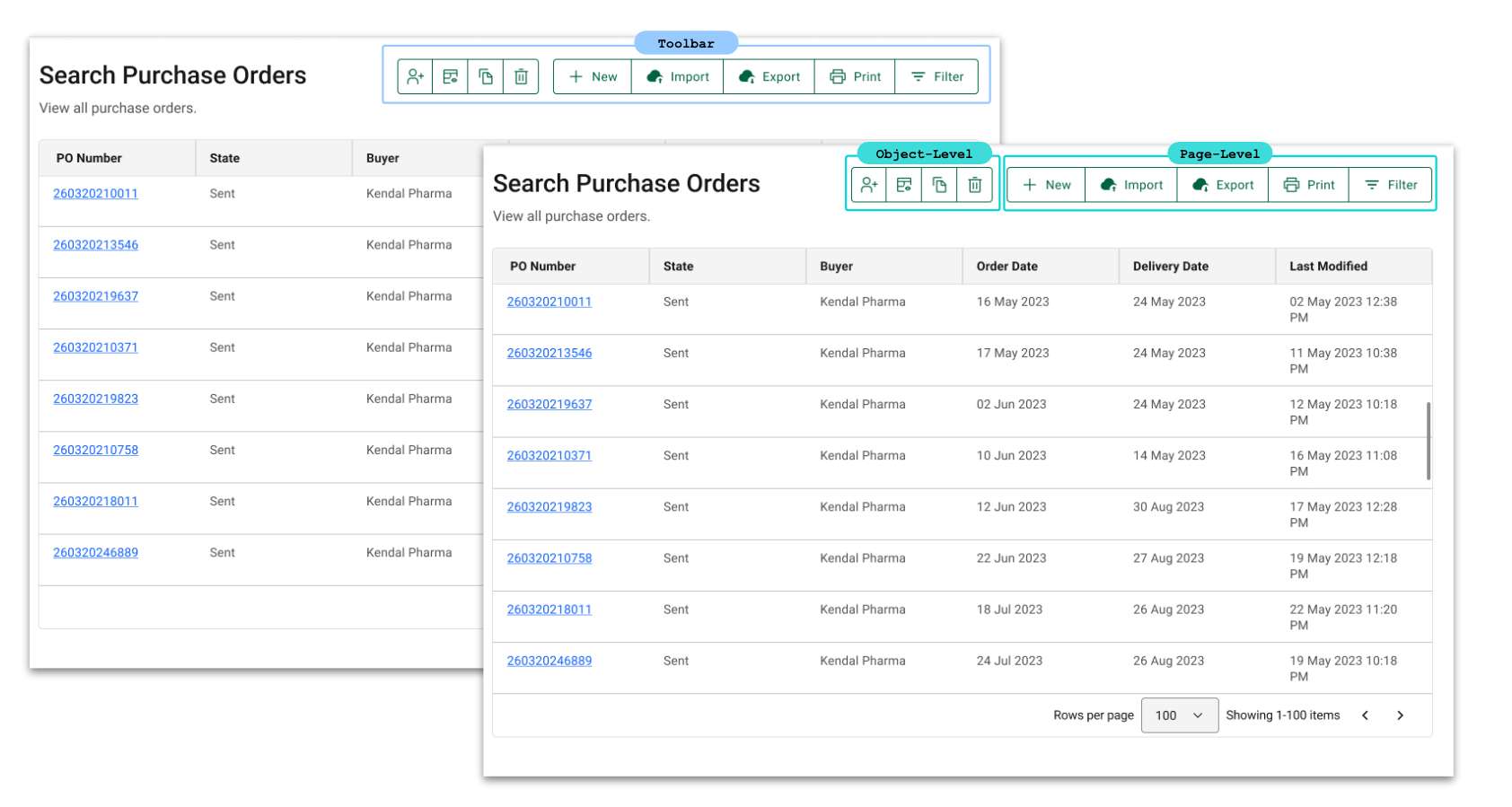
Toolbar and Operations

Each operation is tied to a specific object and automatically wires up behaviors, like interactions on an object instance (e.g. edit, save), navigation, and workflow transitions. This ensures consistency across both the UI and API. OPUS offers a diverse range of object types, each with predefined operations that can be seamlessly integrated into your solution. The OPUS Solution Environment (OSE) allows users to effortlessly add these operations through a simple drag-and-drop interface. When an operation is selected, the UI automatically prompts for any necessary input, ensuring instance data is wired up and ready before the operation is executed.

From an OPUS Solution Design perspective, object operations significantly reduce both cognitive load and development overhead by providing predefined actions for each page type, eliminating the need to manually create calls-to-action (CTAs) for individual screens. These operations go beyond typical CRUD (create, read, update, delete) actions, accelerating solution delivery while improving overall quality. 

In a multienterprise context, this feature is particularly valuable as it ensures users can only see and perform actions configured for them, based on their assigned roles and permissions. Roles are defined by the operations, menus, and menu items associated with them, providing consistent control over user access across both enterprise and multienterprise applications. Even within your own enterprise (e.g. an enterprise solution), roles are essential for managing user access within a single company, allowing the Owner to enforce specific permissions and actions within their organization.

Standard Operations Simplify User Interactions

Standard operations, such as search, view, create (new), edit, and delete, are predefined for each business object. These actions provide intuitive, consistent ways for users to interact with objects, ensuring a streamlined user experience. Standard operations offer basic functionality required across nearly every business object, eliminating the need for application-specific logic. Some examples include: 
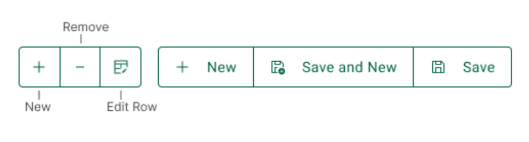
Example operations for New Page
  • Search (e.g. locating purchase orders)
  • New (e.g. creating a new purchase order)
  • View (e.g. displaying details of a purchase order)
  • Edit (e.g. modifying an existing purchase order)
  • Delete (e.g. removing a purchase order)

Specialized Operations Address Unique Business Needs

When standard operations don’t meet specific business requirements, OPUS Solution Designers can define specialized operations. These extend beyond basic CRUD actions, addressing unique workflows or permissions. For example, a specialized operation like "editComment" allows more granular control over user interactions.

These are necessary when:

  • Specific operation permissions are required.
  • Menu item permissions don't restrict API access.
  • Multiple screen types are needed (e.g. Full Edit vs. Simple Edit).
  • Input arguments exceed standard data model fields.

 

TraceLink University

Table of contents

Related Content
The Opus Platform
TraceLink’s OPUS Platform
TraceLink’s OPUS is a unique platform as a service (PaaS) that integrates a metadata-driven, no-code solution with the world’s only end-to-end global life sciences supply chain network, delivering superior business outcomes by optimizing complex mutlienterprise processes to enhance operational efficiency, mitigate risks, enable informed decision-making, and strengthen overall supply chain agility and resilience.
View More
The Opus No-Code Approach
The OPUS Platform’s Metadata-Driven, No-Code Solutions
OPUS Solution Designers can create solutions on the OPUS Platform without being data modelers or developers, but understanding core modeling constructs and the benefits of the OPUS approach is beneficial before using the OPUS Solution Environment (OSE).
View More
Anthem Design Guide
Get Started Designing on the OPUS Platform With OPUS Anthem
Anthem is TraceLink's Design System that establishes consistent design conventions across the OPUS Platform, allowing designers to quickly create solutions that meet various business and user needs.
View More
solution designer
OPUS Solution Environment
A no-code, drag-and-drop environment that enables business users to tailor the workflows and user experiences of TraceLink solutions to the unique requirements of their supply chain without the need for specialized technical skills or extensive coding knowledge.
View More
Page Types
Understanding Page Types within the OPUS Solution Environment (OSE)
Page types enable Solution Designers to efficiently create user-friendly pages using a drag-and-drop interface, allowing them to organize information for optimal usability.
View More
Anthem Design Guide
UX Writing and Terminology
The goal is to create UI text that is clear and concise, offering users the essential information they need to effectively complete their tasks.
View More

Cookie Settings

When you visit any website, it may store or retrieve information on your browser, mostly in the form of cookies or similar tracking technologies. Please see below for an overview of the categories of cookies and similar technologies used on this site. You can allow or deny some of all of them, except Strictly Necessary Cookies which are required to provide the site to you. However, blocking some types of cookies may impact your experience of the site and services we are able to offer.

Please see our Cookie Policy for more details, including a list of the cookies we use. You can change your consent options at any time by following the “Cookie Settings” link in the Cookie Policy.
'Strictly Necessary' cookies let you move around the Site and use essential features like secure areas, shopping baskets and online billing. Without these cookies you would not be able to navigate between pages or use certain vital features of our Site, so we do not require your consent for their use. These cookies don't gather any information about you that could be used for marketing or remembering where you've been on the internet. For example, we use these Strictly Necessary cookies to identify you as being logged in to the Site. You can set your browser to block or alert you about these cookies, but if you do so, some parts of the Site will not work.
'Performance' cookies collect information about how you use the Site, such as which pages you visit, the time spent on the Site and if you experience any errors. We use performance cookies to provide aggregated statistics on how the Site is used and help us improve the Site including by measuring any errors that occur.
'Functional' cookies are used to provide services or to remember settings to improve your visit. We use 'Functionality' cookies to remember your settings and choices and show you when you're logged in to the Site.
‘Targeting' cookies are linked to services provided by third parties, such as 'Like' buttons and 'Share' buttons. The third party provides these services in return for recognizing that you have visited the Site. We also use 'Targeting' cookies to gather information that could be used to display content that we think may interest you.

Footer

  • Quick Links
    Get a Demo
    TraceLink Network Directory
    The Network
    OPUS Platform
    Technical Support
    Open Jobs
    API: Terms of Use
  • Products
    Multienterprise Information Network Tower
    U.S. DSCSA Compliance
    Targeted Recalls
    Process Orchestration for Empowered Teams
    Serialization
    Global Compliance
  • Resources
    Resource Center
    Events
    TraceLink University
    Partners
    Community
  • About TraceLink
    Our Story
    Newsroom
    Culture & Careers
    Leadership
    Our Values
    Corporate Social Responsibility
  • Hot Topics
    Transaction Integration
    Supply Chain Visibility
    DSCSA Compliance
    Process Orchestration
    Kazakhstan Compliance for Pharmaceuticals
    Kyrgyzstan Compliance for Pharmaceuticals
Follow Us on Social
Facebook
Linkedin
X
Legal & Trust.
© TraceLink Inc. 2009-2026 All Rights Reserved
Contact Us Today
Contact us today to begin your journey toward agentic supply chain orchestration — digitalize your end-to-end supply chain with intelligence, flexibility, and collaborative orchestration.
Contact Us
Stay Up-to-Date
Subscribe to receive industry insights and stay at the forefront of evolving trends.
Subscribe